What to Write in a Sympathy Gift Message | Keepsake Grove
A sympathy gift message is often harder than choosing the gift itself. Many of us freeze, afraid our words will sound wrong, too cheerful, or hollow. The truth is simpler: the person grieving needs to know you're there, and that you remember who they've lost.
Keep It Simple and Honest
The best sympathy messages are short. Two or three sentences. One honest sentence. People in early grief often cannot read long passages; they don't retain them, and elaborate language can feel like you're trying too hard.
Start with what's true:
- "I'm thinking of you."
- "I'm so sorry for your loss."
- "I remember [name]. She was kind and funny."
- "I wish I had the right words. I'm here if you need me."
Avoid:
- "They're in a better place" (unless you know the family's beliefs)
- "At least…" (this dismisses their loss)
- "I know how you feel" (you don't)
- "Let me know if you need anything" (be specific: offer a meal, a walk, a phone call)
The goal is to acknowledge the death and show up—not to heal or explain it. Keepsake Grove's engraved keepsakes often work best when paired with a message that simply says the person's name and dates, or a few words that meant something to the family.

Name the Person Who Died
Don't avoid saying their name. Many people worry this will make the grieving person sadder. The opposite is true. Hearing or reading their loved one's name is a relief. It says: I know who you lost. I'm not pretending they didn't exist.
Examples:
- "Sarah was a gift to everyone who knew her. I'm so sorry she's gone."
- "I'll remember [name]'s laugh for the rest of my life."
- "Thinking of [name] and of you."
If you didn't know the person who died, that's okay. You can still name them and acknowledge what you do know:
- "Even though I didn't know [name] well, I could see how much they meant to you."
- "I'm honored to have met [name] at [occasion]. I'm so sorry for your loss."
Naming the person transforms your message from a generic sympathy card into something true and specific to their loss.
Offer Something Real, Not Abstract
"Let me know if you need anything" sounds kind but puts work on the griever. Instead, offer one specific thing:
- "I'm bringing dinner Tuesday. What allergies should I know?"
- "Can I come sit with you for an hour this Saturday?"
- "I'm calling you Friday evening. You don't have to talk—I just want to hear your voice."
- "I'm sending a care box. It has tea, chocolate, and a journal if you want to write."
This shows respect. You're not asking them to decide what to ask for when they're overwhelmed.
Consider the Gift Itself as the Message
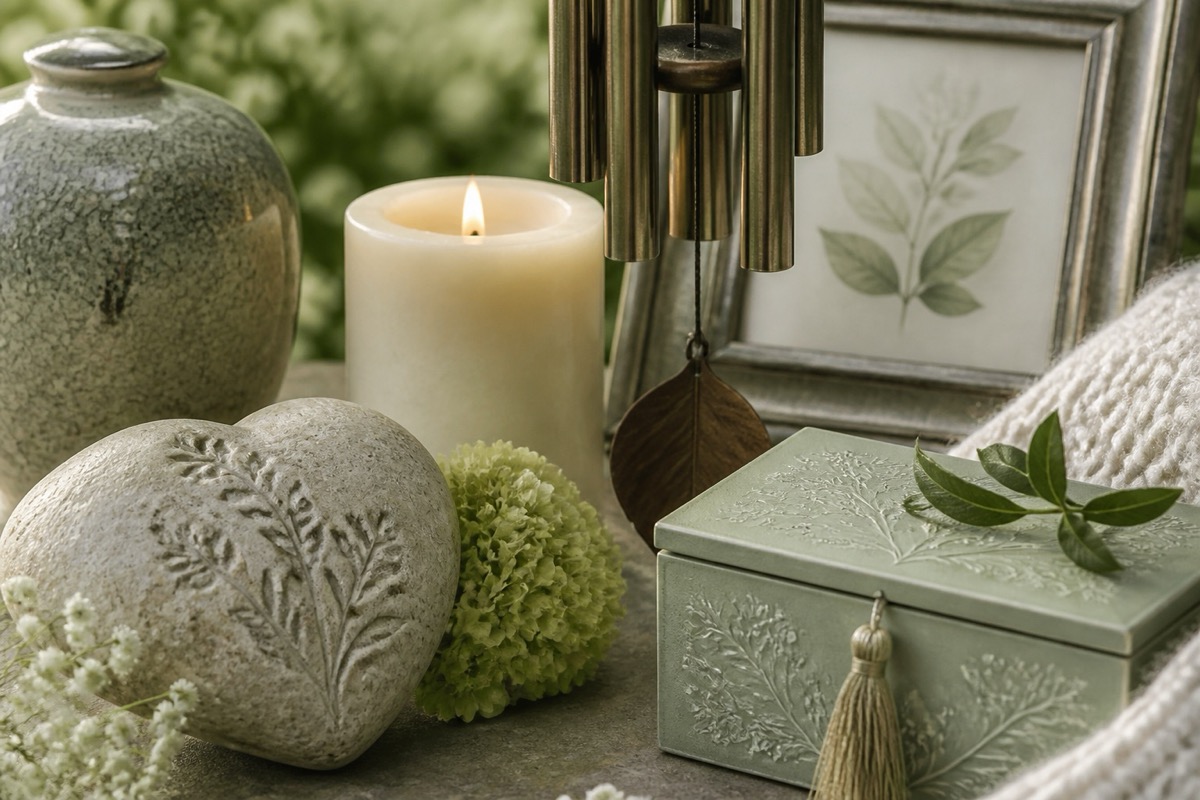
Sometimes the most powerful sympathy message is built into the gift. An engraved keepsake box with the person's name and dates carries meaning without needing extra words. A memorial wind chime or remembrance lantern can hold a short phrase—a favorite quote, a date, or simply "Forever in our hearts."
When you choose a personalized memorial gift, the engraving or inscription becomes the message. This is especially useful if you struggle to find the right words. The gift says it for you.
| Gift Type | Best For | Message Style | Why It Works |
|---|---|---|---|
| Engraved keepsake | Any loss | Name + dates or short phrase | Permanent, tangible, honored daily |
| Memorial candle | Family ritual | Simple name or date | Quiet, reflective, lit in remembrance |
| Wind chime | Outdoor remembrance | Favorite saying or "In memory of" | Visual + auditory, ongoing presence |
| Cremation or remembrance jewelry | Close family | Initials or birthstone | Wearable, intimate, private |
| Memorial ornament | Annual remembrance | First name + year | Seasonal, builds collection over years |
Timing Matters—So Does a Handwritten Card
A text message or email is better than nothing. A handwritten card is better than that. The act of writing by hand says: I took time. I thought about you.
Send your sympathy gift and message soon, but not immediately. A flood of messages on the day of death can overwhelm. A message that arrives three days later, or next week, is often more comforting. It says: I'm still thinking of you when the crowds have gone.
Keepsake Grove includes a handwritten card option with every order. It's one more way to make your gift feel intentional and personal—not rushed.
What to Check Before You Order
If you're pairing a personalized gift with a message, a few details matter:
- Spelling of the name: Is it Michael or Micheal? Jean or Jeane? Double-check. Keepsake Grove shows you a proof before engraving, so you can catch mistakes.
- Dates: Birth date and death date. Order them clearly so there's no confusion.
- Length: Some engravings have character limits. Keep your message short—two to five words, or a date range.
- Tone: Match the gift to the family's style. An engraved stone is formal and grounded. A memorial lantern feels gentler. A piece of remembrance jewelry is intimate.
- Delivery time: All Keepsake Grove gifts are made to order (2–5 business days production, then 2–5 days US delivery). Don't order the day before a funeral. Plan ahead. See shipping details for more.
Words for Specific Losses
Loss of a parent:
- "Your [mother/father] was so proud of you. I'm sorry she's not here to see you now."
- "[Name] set an example I'll carry forward."
Loss of a spouse or partner:
- "I'm thinking of you and [name]."
- "You two had something truly special. I'm here."
Loss of a child:
- "I'm so deeply sorry. [Name] was loved."
- "There are no words. I'm holding you in my heart."
Loss of a friend:
- "[Name] made the world brighter. You're in my thoughts."
- "I'm grateful for the time you and [name] had together."
Loss of a pet:
- "[Pet's name] was family. I'm so sorry for your loss."
- "The love you gave [name] will last forever."
Keepsake Grove offers pet memorial gifts for those grieving animal companions—because that loss is real and deserves real kindness.
---
Your sympathy message doesn't need to be perfect. It needs to be true.
You don't have to find the right words. You just have to show up, name the person, and say you're thinking of the griever. A simple message paired with a thoughtful memorial gift tells someone: You're not alone. I see your loss. I remember them too.
Still searching for the right gift? Start with our gift finder or browse all collections to explore memorial ornaments, memorial stones, or sympathy gift baskets.
Questions? See our FAQ or learn how personalization works.
Frequently asked questions
How long should a sympathy gift message be?
One to three sentences. Two is often perfect. A griever's attention is fragile; brevity shows respect. Focus on naming the person and one true feeling. Avoid long explanations or attempts to comfort.
Can I say "Let me know if you need anything"?
It's kind but puts work on the griever. Better: offer one specific thing. "I'm bringing dinner Tuesday" or "I'm calling Friday" shows you mean it and don't expect them to ask.
Should I mention the person who died by name?
Yes. Always. It shows you remember them as a real person, not just an abstract loss. Grieving people worry others will forget the person they loved.
What if I didn't know the person who died well?
Still acknowledge them. "I wish I'd known [name] better, but I could see how much they meant to you." Then focus on supporting the griever.
When should I send the sympathy gift?
Soon, but not frantically. Within the first week or two is standard. Don't order last-minute for a funeral. Keepsake Grove gifts take 2–5 business days to make, plus delivery. Plan ahead for meaningful timing.
Is a handwritten card better than typed?
Yes. Handwriting shows you took deliberate time. If handwriting is hard, type and sign by hand. A printed or emailed message is better than nothing—presence matters more than perfection.